
Veganism and Deforestation: Could Adopting a Vegan Lifestyle Help Curb Deforestation and Usher in an Era of Global Food Security?
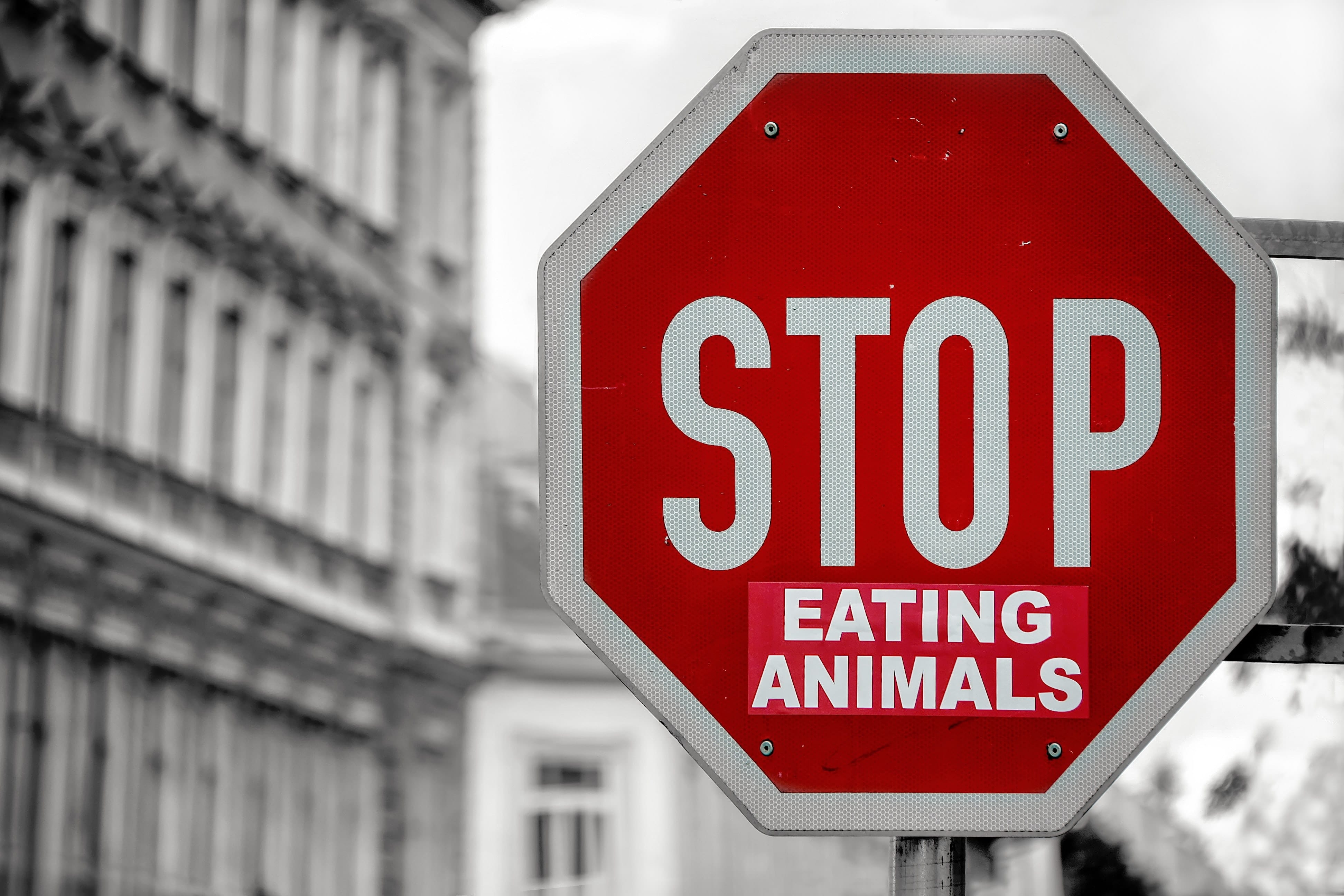
Photo by Simon Berger on Unsplash
Studying about climate change in my environmental science class in highschool always weaved a dystopian future in my teenage brain, one filled with natural disasters and extreme resource shortages. Deforestation, the purposeful clearing of forest land, especially, made me anxious as I was bombarded with apocalyptic statistics and figures that predicted doom and left me feeling desolate.
“It is estimated that within 100 years there will be no rainforests”
“Globally, 1-2 acres of rainforests are cleared every second and animal agriculture is responsible for 91% of the amazon rainforest’s destruction”
“By the year 2030, we might only have 10% of Rainforests left”
However, in the face of this calamity, my textbook seemed to prescribe meagre solutions to combat the monstrosities that deforestation would bring. “Use less paper products” to “plant 5 trees every birthday” somehow always felt inadequate in the face of the gargantuan and ever growing problem that deforestation is. Forests play an essential role acting as carbon sinks, helping to a certain extent to mitigate climate change. Further, these biologically rich, complex landscapes are imperative to protect biodiversity and ample other resources.
With our rapidly growing global population and resource shortages, built environments have encroached more and more into forested territory. According to the IPCC AR6 report, “an estimated 821 million people are currently undernourished… The food system is under pressure from non-climate stressors (e.g., population and income growth, demand for animal-sourced products), and from climate change”. According to the FAO, agriculture causes around 80% of deforestation. Predominantly commercial and industrial agriculture (livestock) cause around 40% of forest loss. This also includes the search for space to grow food, fibers or biofuel. There is a clear linkage between agriculture and deforestation.
I wondered if there was a more targeted solution to this problem, something that we at a personal level would be able to do to mitigate deforestation. After researching the topic, I realised that deforestation is a deeply socio-political and economic problem that spans over countless industries. However, the largest culprit was the agricultural sector, struggling to meet food security demands of over 7 billion people. This brought forth a pertinent question: how can we meet demands of food while conserving our land and protecting our forests that serve such an important ecological role?
The aforementioned view was bolstered by the documentary, “Cowspiracy: The Sustainability Secret” on Netflix that presented some eye opening facts:
To feed a person on a vegan diet for a year requires 1/6th of an acre of land
To feed a person on a vegetarian diet (eggs and dairy) requires three times the aforementioned land
To feed a person on a non-vegetarian diet requires 18 times the aforementioned land
Further, we can produce up to 37000 pounds of vegetables on 1.5 acres of land, but only 375 pounds of meat on the same land.
In order to visualize this:

The solution may seem straightforward. To follow a plant based diet, that uses less land in production of crops therefore utilizing less land in total, curtailing the need to cut down forests to create new agricultural ground. However, we must take into consideration that forests are incredibly socio-politically, historically, biologically, ecologically diverse entities. A forest is not just a physical entity but it is profoundly shaped by the battles that different interest groups have in defining and maintaining forests. Over the last 2 centuries, the number of stakeholders in forests have expanded drastically. This essay aims to explore the veracity of the claim that adopting veganism could help curtail deforestation by using data on forest land usage due to agriculture. It will assess if veganism could bolster global food security. Further, it will explore the feasibility of the entire global population adopting veganism through a socio-cultural perspective.
There is a plethora of scientific data that underscores the land and water usage of various food products. This water and carbon-footprint data strongly indicates that animal based products are extremely detrimental to the environment. As our freshwater sources dwindle, it is important to be cognizant of various water-footprints. Below is a graph I made to visualize the water footprints of various foods:
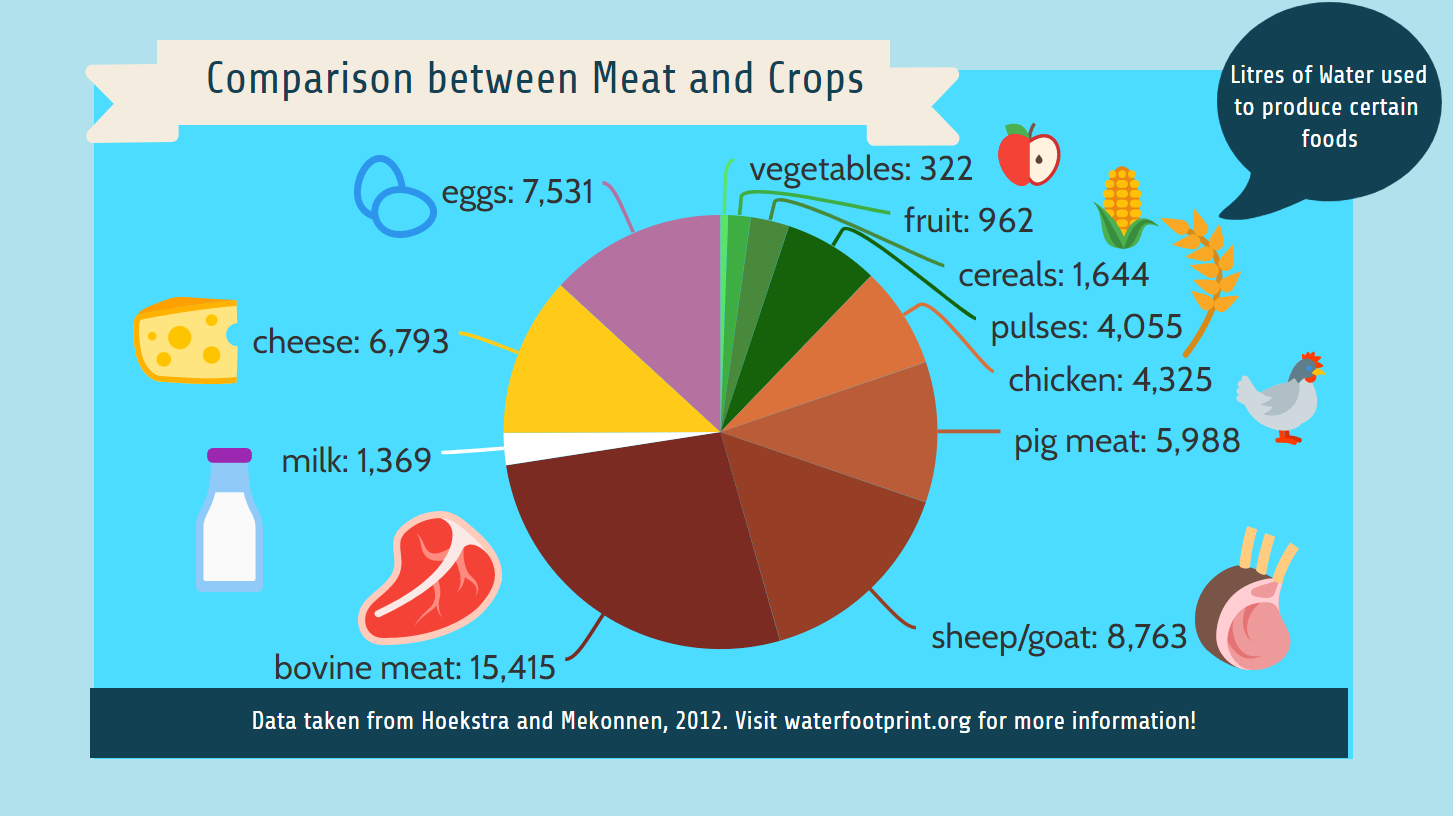
Clearly, animal products occupy a large portion of the pie chart, indicating that they consume the most water per kg of the food produced. Similarly, with regards to land use per kg, animal products top the charts, using the most land in comparison to crops.

This data is a stark indication of the unsustainable nature of non-vegetarian diets in the current ecological context. We simply cannot afford to consume animal based products, with the kind of food demand we have, without seriously damaging the environment, especially forest land.

As the data indicates, out of all agricultural land available on the earth, 77% is used for meat and dairy. That is 40 million hectare sq of land. However, global calorie supply is gained 18% from meat and dairy and 83% from plant based foods. This shows that the agriculture system is currently inefficient, devoting all resources to the meat and dairy industry without sufficient calorific value per person. This also indicates that the world could potentially rely on solely plant-based food at a lesser environmental and fiscal cost.
A study conducted by Karl-Heinz Erb published in Nature garnered results that showed that by 2050 all possible scenarios considering veganism will be feasible (proceeding without deforestation), in comparison to a mere 18% for non-vegetarian diets. “Vegan diets show the largest number of feasible scenarios”. The study notes that human diets play a decisive role in the space consumed in agriculture and “are the strongest determinant of the biophysical option space”. Plant based diets are less restricted by limits on the biomass supply of grazing land and cropland availability - factors that deeply affect non-vegetarian diets. The results from this study indicate that “deforestation is not a precondition for supplying the world with sufficient food in terms of quantity and quality in 2050 and that many options exist based on different strategies. A vegan or vegetarian diet is associated with only half the cropland demand, grazing intensity and overall biomass harvest of comparable meat-based human diets.”
It is a well-known fact that resource shortages will become a scary inevitability due to overpopulation. To feed an estimated 10.5 billion people in 2050, there is a desperate need to adopt sustainable agricultural practices - something that simply cannot be done with animal rearing. Apart from the large use of land and water, the food used to rear animals is approximately 760 million tons of fodder which requires immense amounts of land to grow. These resources can be put to use in order to ensure global food security.
It may be presumptuous to assume that total food security can be attained through veganism. World hunger is not just a problem of lack of resources. In fact, the world currently produces more than 1½ times the amount of food needed to feed everyone on the planet. Studies show that lack of high yields are not an immediate biophysical necessity and the global population can be fed healthily even with low cropland yields and little cropland expansion when “diets with a reduced fraction of livestock products are adopted”. The problem lies with distribution, inequitable access to resources, income inequalities, politics and the vested interests of big businesses.

However, a downward trend has been observed with regards to beef consumption in recent times which is a sign of changing times and diet culture.
It is dangerous to assume that every person has the means to pursue a plant-based diet. Our diets have deep socio-cultural roots. Animal husbandry has been a part of human civilization for 10,000 years and our diets are not just limited to food on a plate but to our occupations and religious and cultural identities. In India you can also witness diets and the food we consume as a way to label people (with respect to caste/creed) and as a means to other people from minority communities (eg: lynching due to enforcement of the beef ban). Further, there are resource dependent individuals, such as indigenous and adivasi communities who rely heavily on livestock for their well-being and livelihoods. However, for urban dwellers, from an environmental point of view, we no longer afford to consume animal products. As the data suggests, a non-vegetarian diet is one of the most unsustainable diets in the world and trying to facilitate this diet is a path that will lead to further deforestation and climate change.
Many argue that global meat and dairy industries provide work for millions, especially those from poorer backgrounds. Here, the economic concept of externalities, which can be positive or negative could help people understand the flawed nature of that criticism. The cost of the externalities that food poses to society is usually not considered. One reason the non-vegan diet is affordable is that these industries are subsidized to enhance production. So production comes at a lower cost because the social cost is being neglected and factory farming is being conducted in grossly unethical yet efficient ways. In behavioral economics, there is a concept called anchoring. Reasons like nutrition and health are just ways to anchor people into consuming meat and dairy. But understanding the science behind nutrition tells us that we derive nutrition differently. Another anchor could be that veganism is an unaffordable western concept. These are hooks that industries use to incentivize people to believe that they need meat and dairy when in reality, if the demand for animal based products decreases, the alternative meat and dairy industry will grow and subsidize their costs while also hiring more individuals to work for their industry.
While the data suggests plant-based diets are the way to secure a sustainable future and mitigate land/water usage, I argue that we cannot simply rely on plant based diets. There is an ever rising need to adopt veganism as it brings forth ideas of ethical and conscious consumption- something imperative in a world driven by consumerism. The foundation of the vegan doctrine is one that rejects the commodity status of non-human creatures and considers them centric. In our world, we are constantly thinking from an anthropocentric view, from the view of mankind. The whole idea of veganism is that it shifts the center such that it is no longer about humans but about all sentient beings. Therefore, a vegan abstains from using any product that is derived from a living being.
It can be argued that much of today’s climate problems are derived from anthropocentric driven human activity that prioritized human thriving to such an extent that human activity became extremely detrimental to the environment. Credit for present day rates of deforestation can be given to the same- rapid industrialization, overpopulation and excessive agricultural activities. Perhaps a vegan lens could be adopted when exploring mainstream climate change discourse in order to broaden our understanding of climate change, and its repercussions, as a whole. Not only will this give us a new perspective, it will also take into account impact on other sentient beings. While there is a small chance that we risk absolute biocentrism, it is imperative that policy makers take into account how human activities are going to irrevocably change the geological and ecological fabric of the world. Some describe this as the onset of the Anthropocene. Research has shown that dietary behavior can be a mode of collective activism and action enabling a “social identity” model of vegan activism. With the onset of climate change denialism and large scale deforestation perhaps veganism could serve as the uniting factor for people as diets are a real and extremely effective way we can contribute to mitigating deforestation and various consequences of climate change.
References:
“Climate Change and Land.” Special Report on Climate Change and Land, Intergovernmental Panel on Climate Change , 2020, www.ipcc.ch/srccl/.
“What Is Forest Conversion ?” WWF, World Wildlife Fund, 2020, wwf.panda.org/discover/our_focus/forests_practice/deforestation_causes2/forest_conversion/.
Benton Professor Tim Benton Research Director, Tim, and Helen Harwatt. “Food System Impacts on Biodiversity Loss.” Chatham House , Chatham House – International Affairs Think Tank, 29 Mar. 2021, www.chathamhouse.org/2021/02/food-system-impacts-biodiversity-loss.
Erb, KH., Lauk, C., Kastner, T. et al. Exploring the biophysical option space for feeding the world without deforestation. Nat Commun 7, 11382 (2016). https://doi.org/10.1038/ncomms11382
Keegan Kuhn, and Kip Andersen . “Cowspiracy: The Sustainability Secret.” COWSPIRACY, First Spark Media, 2019, www.cowspiracy.com/facts.
Madeline Judge, Julian W. Fernando, Christopher T. Begeny, Dietary behaviour as a form of collective action: A social identity model of vegan activism, Appetite, Volume 168, 2022, 105730, ISSN0195-6663,https://doi.org/10.1016/j.appet.2021.105730.(https://www.sciencedirect.com/science/article/pii/S0195666321006371)
Pimentel, David, and Marcia Pimentel. “Sustainability of Meat-Based and Plant-Based Diets and the Environment.” Academic.oup.com, The American Journal of Clinical Nutrition, Volume 78, Issue 3, September 2003, Pages 660S–663S, 2020, academic.oup.com/ajcn/article/78/3/660S/4690010.
Ritchie, Hannah. “How Much of the World’s Land Would We Need in Order to Feed the Global Population with the Average Diet of a given Country?” Our World in Data, 2020, ourworldindata.org/grapher/beef-and-buffalo-meat-consumption-per-person?country=USA~ARG~DEU~FRA~ITA~ESP~CAN~IND.

